Measure well. Cook your way.

Bread flour

One US cup of bread flour is estimated at 120 grams using our reference. How you fill the cup matters.

Reference ingredient

120 g per US cup

Bread flour · Dry flour, spooned and levelled

Your kitchen converter

Dry flour, spooned and levelled

Decimals and fractions welcome: 0.5, ½ or 1 1/2.

Your ingredient estimate

50 grams of bread flour is about

0.42

US cups


Approximate recipe equivalent for Bread flour. Ingredient preparation and measuring technique affect the result.

Reference: 120 g per 236.5882 ml US reference cup. More precision: 0.4167 US cups.

Volume depends on the ingredient and the measuring method. Results crossing weight and volume are recipe estimates.

Bread flour conversions at a glance

Reference: 120 grams per US cup, dry flour, spooned and levelled. Values are approximate.

Grams of bread flour to US cups
Bread flour weightUS cupsKitchen measure
30 g0.25¼ cup
50 g0.42a little over ⅓ cup
100 g0.83a little over ¾ cup
120 g11 cup
150 g1.251 ¼ cups
200 g1.671 ⅔ cups
250 g2.08a little under 2 ⅛ cups
Cups of bread flour to grams
CupsUS cup (236.59 ml) → gMetric cup (250 ml) → g
0.25 cups3031.7
0.3333 cups4042.27
0.5 cups6063.4
0.6667 cups8084.54
0.75 cups9095.1
1 cup120126.8
2 cups240253.61
Spoons of bread flour to grams by system
SpoonUS (14.79 / 4.93 ml)Metric (15 / 5 ml)Australian (20 / 5 ml)
1 tbsp7.57.6110.14
1 tsp2.52.542.54

The measures most often searched for this ingredient, converted with the reference above.

Searched bread flour amounts in grams, US cups and ounces (approximate recipe equivalents)
AmountGramsUS cupsOunces (weight)
1 US cup120 g1 US cups4.2329 oz
3.5 US cups420 g3.5 US cups14.8151 oz
4 US cups480 g4 US cups16.9315 oz
4.5 US cups540 g4.5 US cups19.0479 oz
5 US cups600 g5 US cups21.1644 oz
50 grams50 g0.4167 US cups1.7637 oz
200 grams200 g1.6667 US cups7.0548 oz
300 grams300 g2.5 US cups10.5822 oz
400 grams400 g3.3333 US cups14.1096 oz
500 grams500 g4.1667 US cups17.637 oz
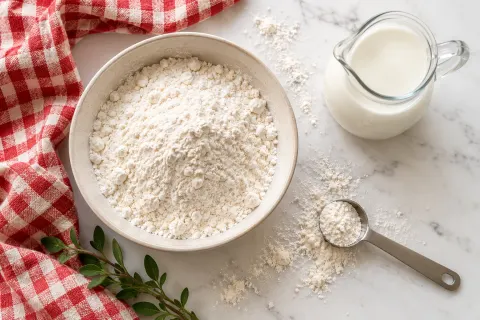
A bowl of flour with a measuring spoon and a jug of milk

Your recipe. Your measuring method.

Spoon, level, then cook.

A light, level cup gives a different weight from a firmly packed scoop. A kitchen scale helps keep the amount repeatable.

How to measure ingredients

How to convert bread flour

Our reference is 120 grams per US reference cup of bread flour, dry flour, spooned and levelled. That works out to about 0.5072 grams per millilitre, so cups = grams ÷ 120 and grams = cups × 120 in US customary measures.

For metric and Australian recipes the cup holds 250 ml, so one cup of bread flour is about 126.8 grams. Australian tablespoons hold 20 ml rather than 15 ml, which the calculator handles when you pick that system.

Preparation changes the weight

The reference describes bread flour as: dry flour, spooned and levelled. A different form, such as sifted, packed, melted, chopped or cooked, can hold a different weight in the same cup and needs its own reference. When a recipe gives a gram amount, weigh that amount instead of converting.

Brand, moisture and how firmly the cup is filled all move the practical result. Treat the numbers here as recipe equivalents, not laboratory densities.

Where the number comes from

The reference comes from King Arthur Baking ingredient weight chart, which lists 1 cup as 120 grams. Published recipe weight, normalised to one reference cup. This site assigns the published cup weight to its adopted US reference cup of 236.5882365 ml; the source itself does not define an exact millilitre cup volume. Checked September 25, 2026.

A few useful answers

Kitchen questions, answered.

How many grams are in a cup of bread flour?

About 120 grams per US customary cup (dry flour, spooned and levelled), or about 126.8 grams per 250 ml metric cup, using our reference.

How many cups are 100 grams of bread flour?

About 0.83 US cups. Use the calculator for any other amount or cup system.

Can I substitute a similar ingredient?

A measurement conversion does not establish a recipe substitution. Two ingredients can weigh the same per cup and still behave differently in a recipe; follow the recipe author's substitution guidance.

Sources behind the numbers

Sources checked September 25, 2026. Ingredient values are recipe equivalents, not laboratory densities.

Choose which optional categories cookingconversion.co may use. Strictly necessary storage is always on. You can change your choice at any time from the Cookie settings link in the footer.