Weight meets volume

Kilograms to cups converter

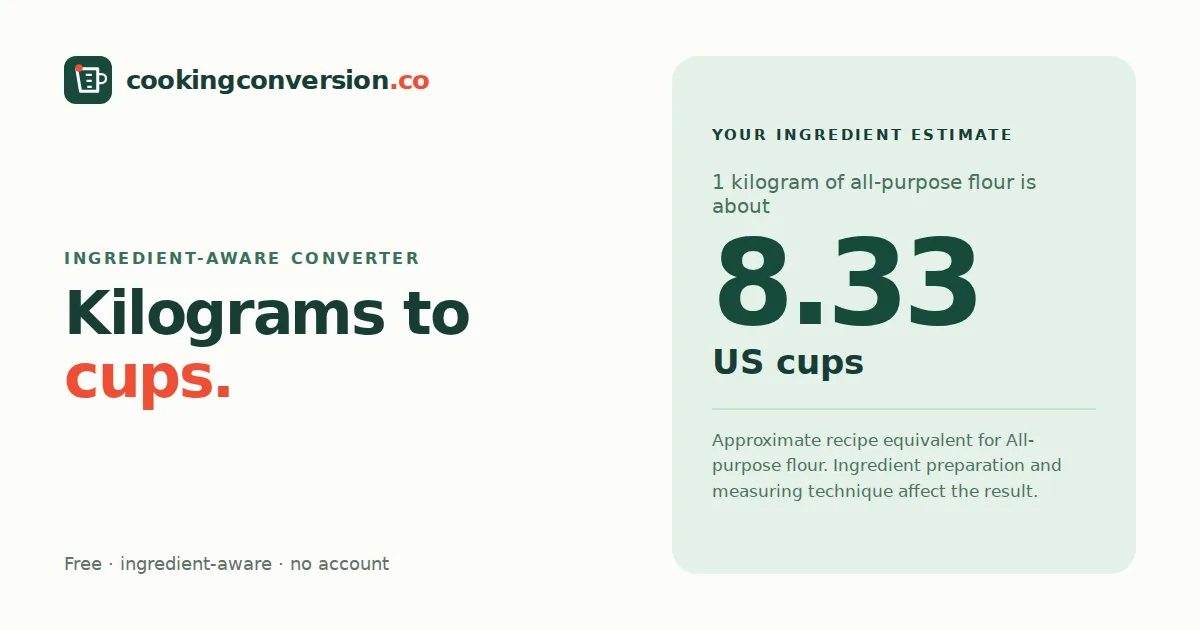
1 kilogram of all-purpose flour is about 8.33 US cups. Pick the ingredient and cup system your recipe uses; the reference behind every estimate stays in view.

Your kitchen converter

Spoon into the cup and level; do not pack

Decimals and fractions welcome: 0.5, ½ or 1 1/2.

Your ingredient estimate

1 kilogram of all-purpose flour is about

8.33

US cups


Approximate recipe equivalent for All-purpose flour. Ingredient preparation and measuring technique affect the result.

Reference: 120 g per 236.5882 ml US reference cup. More precision: 8.3333 US cups.

Volume depends on the ingredient and the measuring method. Results crossing weight and volume are recipe estimates.

Kilograms to cups table

Fixed reference: All-purpose flour · Spoon into the cup and level; do not pack. The calculator above is editable.

Kilograms to cups for all-purpose flour at 120 g per US reference cup (approximate)
KilogramsCups (approx.)Kitchen measure
0.25 kg2.0833a little under 2 ⅛ cups
0.5 kg4.1667a little over 4 ⅛ cups
1 kg8.33338 ⅓ cups
1.5 kg12.512 ½ cups
2 kg16.666716 ⅔ cups
5 kg41.666741 ⅔ cups
Kilograms to cups converter: 1 kilogram of all-purpose flour is about 8.33 US cups
Formula. cups = kilograms ÷ grams per cup of the ingredient. Example: 1 kg of all-purpose flour → 8.3333 US cups.

How to convert kilograms to cups

This calculation crosses from mass to volume, so it needs an ingredient reference. The calculator starts with all-purpose flour at 120 grams per US reference cup (spoon into the cup and level; do not pack). Choose the exact ingredient and form your recipe means before using the answer.

For a weight input, convert to grams, divide by the ingredient's grams per reference cup, then adjust for the selected cup or spoon volume. For a volume input, reverse the process. The answer is a recipe equivalent, not a laboratory density measurement, so brand, moisture, packing and measuring technique can all change the practical result.

Which cup does the recipe mean?

US recipes use the 236.59 ml customary cup. Metric and Australian recipes use a 250 ml cup, which changes a cup of all-purpose flour from about 120 g to about 126.8026 g on the same reference. Pick the system above to match the recipe, not the cups in your drawer.

How the cup is filled matters as much as its size. The reference used here describes a specific method (see the note under the ingredient), so a scooped and packed cup will not match a spooned and levelled one.

What are kilograms and cups?

A kilogram is 1,000 grams, the SI base unit of mass. In the kitchen it appears on bags of flour, sugar and meat.

A US customary cup is 236.5882365 ml, 8 US fluid ounces or 16 tablespoons. Metric and Australian cups are 250 ml; US nutrition labels use a 240 ml cup.

Specific to this conversion

Kilograms to cups: questions people ask

How many cups are in one kilogram?

About 8.3333 US cups for all-purpose flour using our reference of 120 g per US cup. Another ingredient gives a different answer, because this conversion crosses weight and volume.

What is 1 kilogram in cups?

1 kilogram of all-purpose flour is about 8.3333 US cups (8 ⅓ cups). It is the most searched amount for this page; the calculator handles any other value.

What if my ingredient is not in the list?

Choose "Custom ingredient" and enter its weight for one US reference cup from a trusted chart or your own scale. The converter never substitutes a similar food; a missing reference stays missing rather than being guessed.

Does the cup system change a weight-to-volume result?

Yes. 1 kilogram of all-purpose flour is 8.3333 US cups in US customary cups but 7.8863 Metric cups in 250 ml metric cups. The reference weight per US cup is the same; only the cup volume changes.

Sources behind the numbers

Sources checked September 25, 2026. Ingredient values are recipe equivalents, not laboratory densities.

Choose which optional categories cookingconversion.co may use. Strictly necessary storage is always on. You can change your choice at any time from the Cookie settings link in the footer.