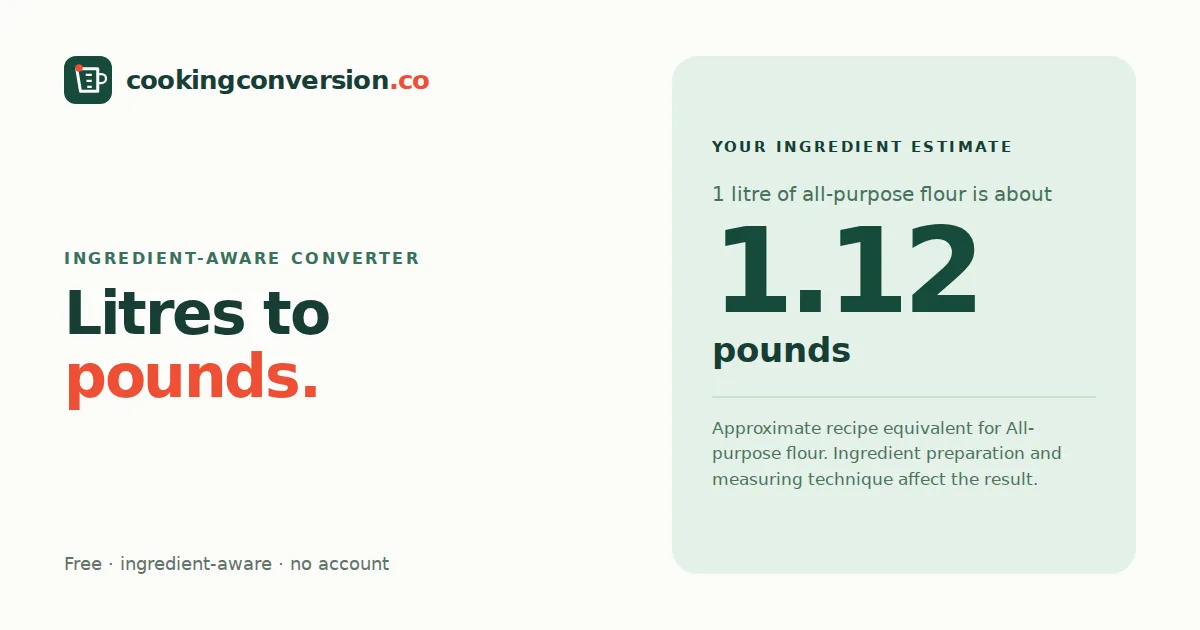
How to convert litres to pounds
This calculation crosses from volume to mass, so it needs an ingredient reference. The calculator starts with all-purpose flour at 120 grams per US reference cup (spoon into the cup and level; do not pack). Choose the exact ingredient and form your recipe means before using the answer.
For a weight input, convert to grams, divide by the ingredient's grams per reference cup, then adjust for the selected cup or spoon volume. For a volume input, reverse the process. The answer is a recipe equivalent, not a laboratory density measurement, so brand, moisture, packing and measuring technique can all change the practical result.
Millilitres, litres and the cup you own
A litre is exactly 1,000 ml. A US customary cup is 236.59 ml, a metric cup is 250 ml and the "legal" cup printed on US nutrition labels is 240 ml, so 250 ml is 1.0567 US cups but exactly 1 metric cup. Switch the system above to match the cup your recipe was written for.
For volumes below 60 ml, spoons are usually easier than a cup: 15 ml is a metric tablespoon (14.79 ml in US customary measures) and 5 ml is a teaspoon. The popular-conversions table above covers the millilitre amounts people look up most.
What are litres and pounds?
A litre is 1,000 millilitres. It is the everyday metric unit for liquids, a little more than a US quart.
A pound (avoirdupois) is exactly 453.59237 g, or 16 ounces. US recipes and packaging use it for butter, meat and bulk flour.